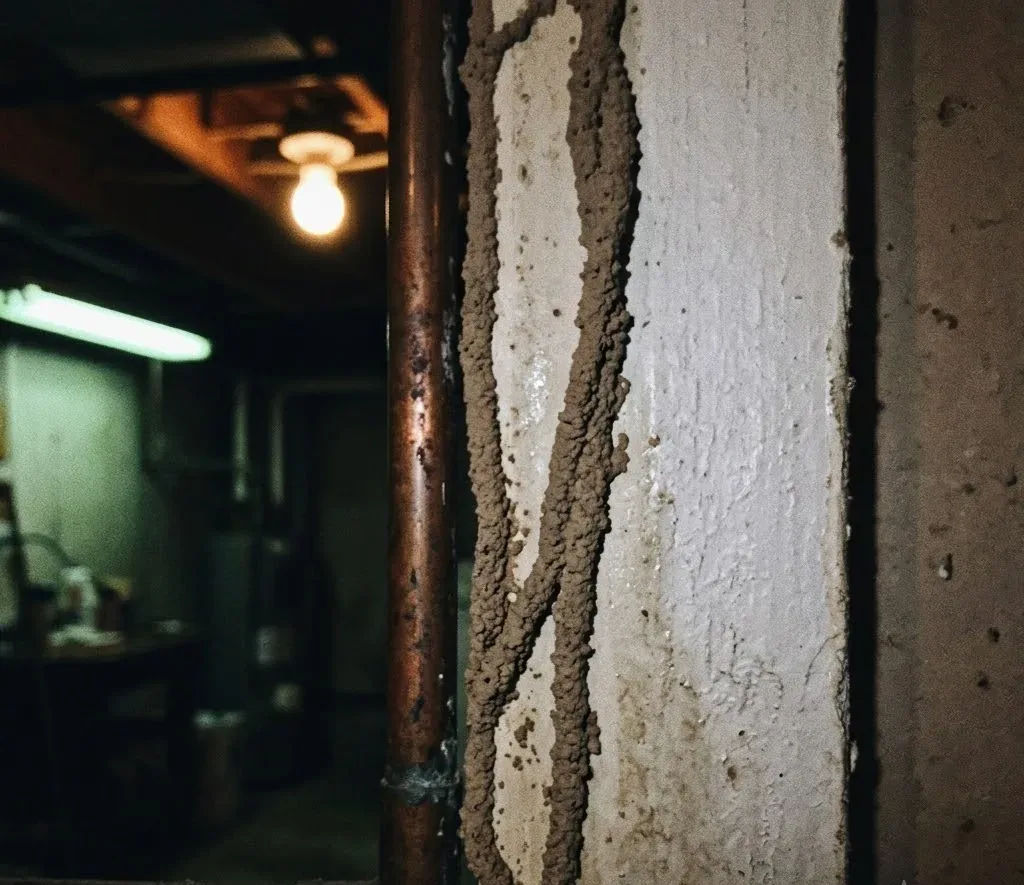
Signs of Termite Damage
Learn how weakened wood, wall changes, and soft or uneven floors may point to termite damage, why visual clues have limits, and what to note before an inspection.
Read article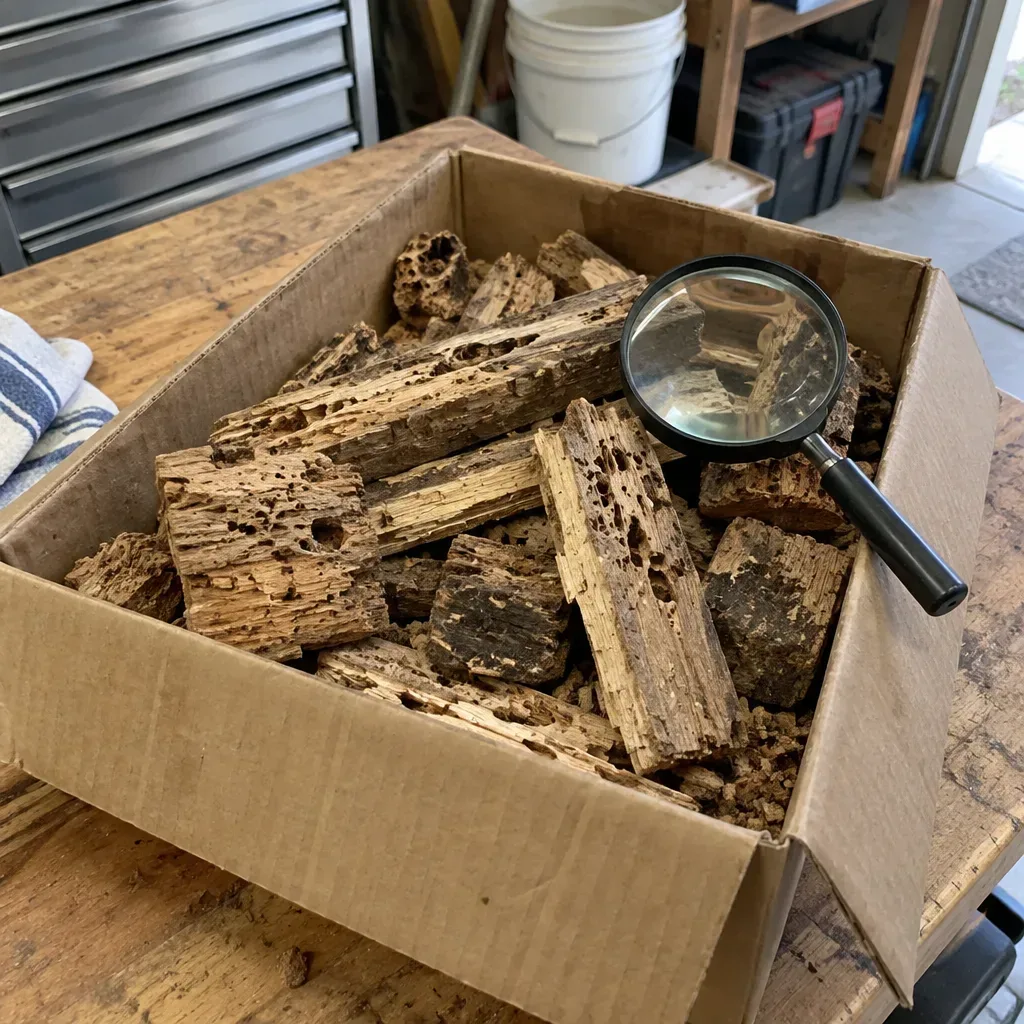
Liquid soil barriers can block subterranean termite routes around accessible foundations.
At Cabezon Park, a homeowner may find an earthen track against a wall or wood that crumbles beside an entry. A mark needs assessment; it alone does not confirm termites. Leave it intact and note its location for the inspection. In Rio Rancho, evidence at one house says nothing about nearby homes. For subterranean termite treatment, the pros we connect you with check the foundation edge, soil access, then sections blocked by concrete. Near The HUB or Haynes Park, the perimeter sets the scope. Liquid termite treatment is termite soil treatment: it creates a treated zone along reachable foundation areas, with drilling considered where access requires it. If access differs from expectations, the application plan and timing can change. Soil work and preparation shape cost; product-label directions govern application.
For a Rio Rancho property, the pros we connect you with can map accessible foundation sections, note slabs or other barriers, and determine where soil application or drilling may be needed. That layout shapes both the work and its cost; blocked access, foundation details, and the amount of perimeter to treat can add steps. The treatment places termiticide in soil zones termites may cross, following the product label. Before work starts, ask what areas are included, what preparation is needed, and how follow-up will be handled.
Near Osuna Park, subterranean termite treatment starts with inspection findings: signs of activity and property conditions shape the plan in Rio Rancho, NM and nearby service areas listed in Bernalillo, Los Ranchos de Albuquerque and Corrales.
Match the service to its setting: homeowners can start at residential termite control, and rental or business owners can begin with commercial termite control.
A liquid termite treatment puts a labeled product into soil beside selected foundation areas, creating a treated zone intended to intercept subterranean termites moving toward the structure. The application must match the product label and site conditions. Coverage can differ around one house: open soil allows direct application, while patios, walkways, or other hard surfaces may require a different approach, such as drilling where permitted by the label and treatment plan.
A continuous treated area can be difficult to form where a slab, porch, or utility entry interrupts accessible soil. The pros we connect you with should explain which sections can be treated directly and where another method or follow-up may be appropriate. In Rio Rancho, the relevant details are at the property itself; proximity to Osuna Park or another landmark does not determine the treatment. Ask for gaps and limits to be identified in the written scope.
The application is only one part of the decision. Soil conditions, foundation design, moisture near wood, and visible evidence can change where treatment is placed and what precautions apply. A liquid termite treatment does not repair damaged wood or prove that concealed areas are clear. If the proposed work does not account for an inaccessible section, pause and ask how that limitation affects the plan before authorizing treatment.
The provider reviews the findings and foundation layout, then marks accessible soil, hardscape barriers, and any sections needing a different application method.
The written plan identifies the product, treated sections, possible drilling, site preparation, and label precautions before application begins.
The applicator treats the specified soil areas according to the product label, using direct application or an approved route beneath a barrier.
The owner receives the completed scope and follow-up terms, including any untreated sections and the conditions for later service.
Rio Rancho has grown through decades of homebuilding, so a treatment plan must fit the individual foundation rather than assume every house has the same access. A slab, addition, patio, or utility entry can interrupt a soil treatment zone. If those breaks go unexplained, termites may have an untreated route. A clear scope shows where product will be applied, where access is limited, and what follow-up the agreement provides.
Termiticide products have specific label directions for where and how they may be applied, along with precautions for people, pets, and the surrounding environment. The applicator should follow those directions and explain any site preparation or time away from treated areas. A Rio Rancho homeowner should get the product and treatment scope in writing, including the perimeter sections covered and any areas that could not be reached.
New Mexico consumer guidance treats foundation type and property conditions as relevant to termite treatment choices. A proposal should therefore connect the recommended soil application to the structure, not rely on a standard perimeter description alone. Ask what drilling, if any, is proposed, how holes will be handled, and what follow-up terms apply. The written agreement should make monitoring, coverage limits, and possible retreatment conditions clear.
Near Haynes Park in Rio Rancho, compare subterranean termite treatment estimates after confirming the inspection charge and getting the proposed treatment scope in writing.
| Visit Scope | Property Areas | Cost Variables |
|---|---|---|
| Basic Inspection | Rio Rancho inspection findings with treatment confined to listed areas | an estimated $600–$1,800 |
| Targeted Treatment | One selected treatment approach based on findings near the Nature Center | an estimated $690–$2,340 |
| Station Monitoring | A focused evaluation and treatment within the quoted boundaries | an estimated $600–$1,800 |
| Wood Repair | Scoped inspection and treatment; monitoring and repairs require separate agreement | an estimated $1,440–$7,200 |
Two homes of similar size may need different scopes if activity appears in different places or access varies. Optional monitoring, follow-up, or damage evaluation can add work, while longer-lasting component upgrades can change the proposal. Use the full pricing guide to see how these choices affect an estimate.
Liquid soil treatment applies a labeled termiticide to selected soil areas beside or beneath a structure, forming zones subterranean termites may cross as they travel from soil toward wood. The exact placement depends on accessible ground, foundation design, and the inspection findings. It is not a blanket guarantee against future activity; ask which sections are included and what the written agreement says about follow-up.
Where soil is exposed beside the foundation, an applicator may place the product directly in a trench or treated zone, as the product label allows. Patios, walks, and slabs can block that route. The plan may call for drilling through a surface to reach soil below, if permitted by the label. Ask which surfaces will be drilled and how the openings will be closed.
Treatment scope and cost depend on the accessible perimeter, foundation details, hardscape barriers, and any drilling or other labeled application steps. The time required also changes with site access and the work specified. A written proposal should identify treated sections, exclusions, preparation, and follow-up terms so the owner can compare the actual work being proposed.
Foundation type and access set the route for liquid termite treatment. Around Rio Rancho, an open slab edge may allow soil application, while a patio or walk can block that route and may call for drilling. Soil conditions, attached features, preparation, and areas that cannot be reached can change scope, cost, and time. Ask which sections will be treated, how blocked edges are handled, and what label directions govern reentry and follow-up.
Liquid treatment creates soil zones; it does not make hidden wood damage visible or restore damaged material. Activity can also be concealed behind finishes. Keep the written treatment scope and ask what signs should prompt a follow-up visit. If damage is noted, have its extent assessed separately before deciding whether repairs are needed.
Ask for a written description of the treated perimeter, including any patio or walk that changes access. Confirm whether soil will be treated from the surface or concrete must be drilled, what the owner needs to clear, and which product-label precautions apply to people, pets, and reentry. Have the agreement spell out follow-up and any retreatment conditions. Ask how each application area relates to the inspection findings.
Expect the estimate for subterranean termite treatment to be $600–$1,800 for this work. Findings on termite activity and damage, along with property conditions and treatment choice, inform the written scope and price confirmed by the pros we connect you with.
Inspection findings describe what was observed and help distinguish possible signs from confirmed activity.
Learn how weakened wood, wall changes, and soft or uneven floors may point to termite damage, why visual clues have limits, and what to note before an inspection.
Read article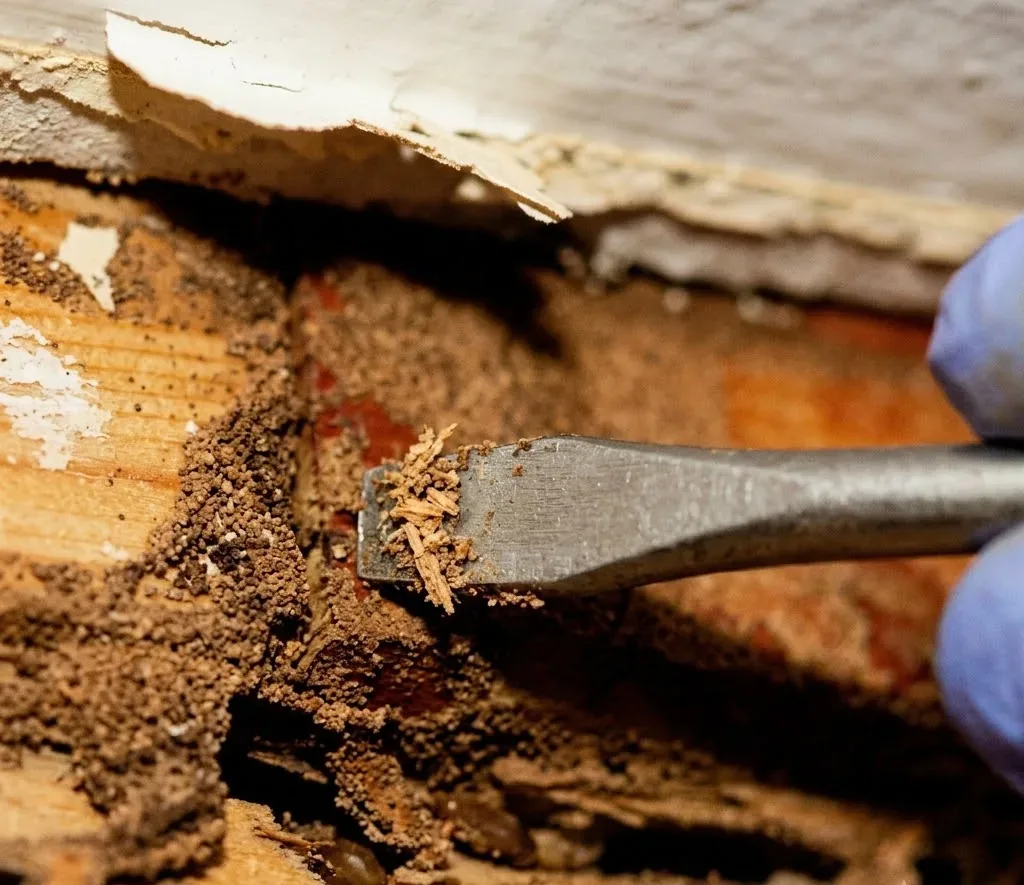
Learn how drywood termite frass differs from sawdust and household dust, where pellet piles may collect, and what to document before requesting an inspection in Rio Rancho.
Read article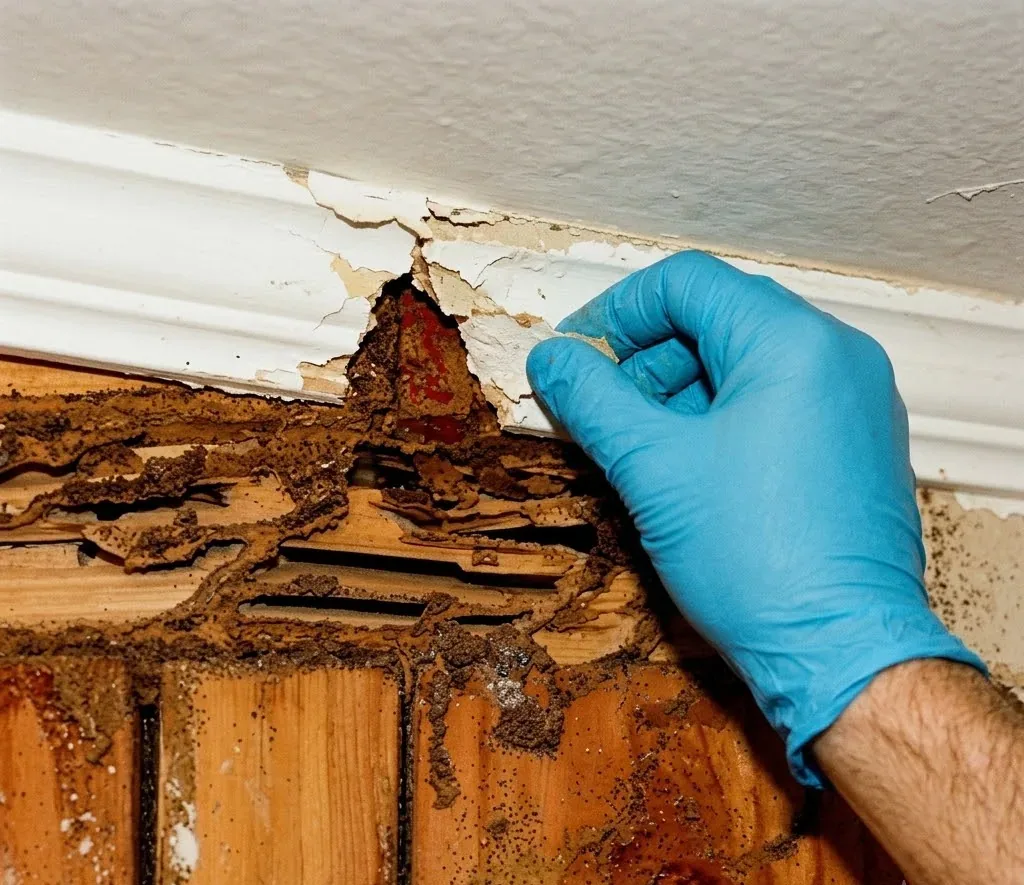
What can a foundation mud tube tell a Rio Rancho homeowner? Learn what it may indicate, what it cannot prove, and why to document it before changing anything.
Read articleFor a home near State Road 4, ask the pros we connect you with to confirm whether the address is within their service area and when an inspection may be available. Share where signs appeared, but leave suspected activity in place for assessment. The inspection findings can guide a property-specific treatment plan. Before arranging work, ask what the visit charge covers, which areas are included, how monitoring or follow-up is handled, and whether wood repair is separate. Rio Rancho coverage and terms should be confirmed directly.
Call (505) 398-8170