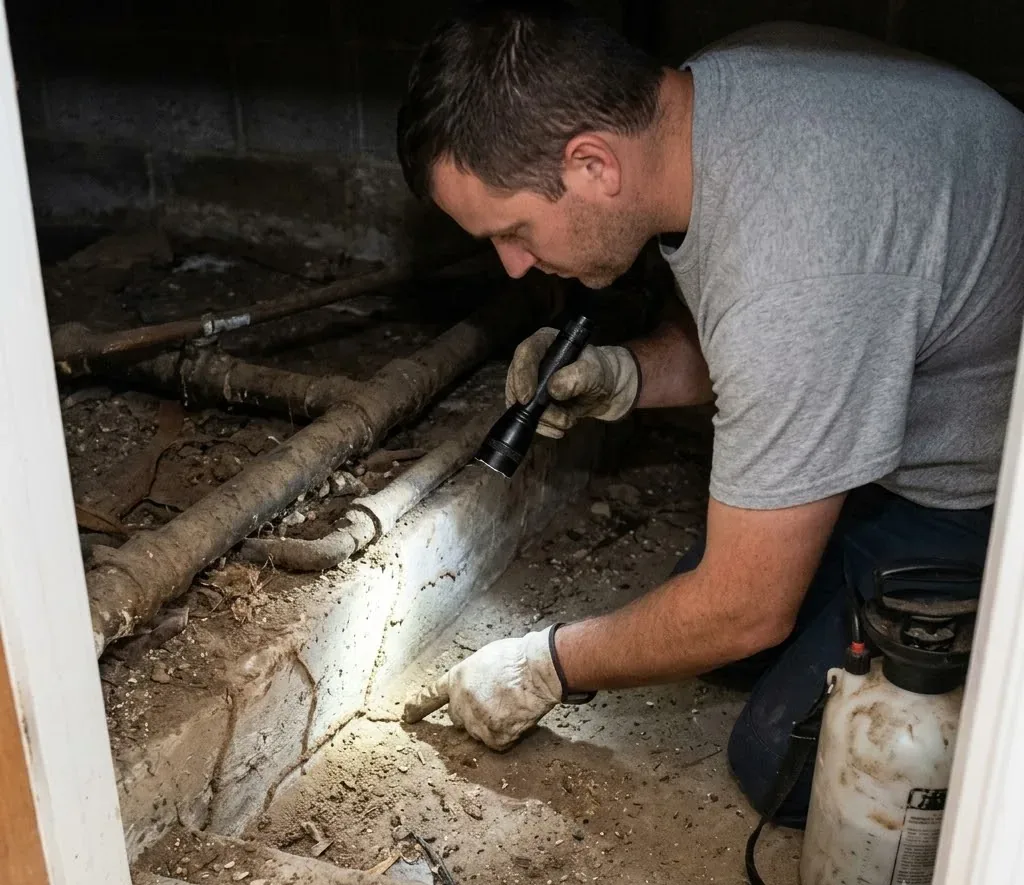
How Moisture Can Favor Termite Activity
Rio Rancho homes vary in foundation design and access around the structure, so the same treatment plan may not fit every property. Along U.S. Route 66 or near Cabezon Park, location alone says nothing about infestation; the inspection must establish activity and site conditions.
Rio Rancho’s homebuilding began in 1962, and a home’s foundation and paving affect which soil areas a provider can reach. At a house near Cabezon Park or the Rio Rancho Aquatic Center, a driveway beside the wall may interrupt treatment access, so the provider should account for it in the written scope.
Inquiries about termite activity can arise in Rio Rancho or elsewhere in Sandoval. Service boundaries do not always follow a city line, so a homeowner should give the property address and confirm that the pros we connect you with can take a call for that location.
Mud Tubes and Other Clues
- CONFIRMATION
- Treatment choice depends on confirmed activity, affected areas, foundation design, access, and conditions that may support termites.
- SOIL ACCESS
- Soil-applied products can address accessible routes, but barriers or inaccessible foundation sections may limit coverage.
- BAIT FIT
- Bait systems use monitored stations; the plan needs follow-up and stations kept accessible for service.
- LOCAL SCOPE
- Localized work can target specified areas, but does not establish that concealed or separate activity has been treated.
- FOLLOW-UP
- After confirming Formosan activity, ask the provider to match labeled options to foundation access, affected areas, and site conditions, then document limits and follow-up.
- TREATMENT
- Warm-season activity may become easier to notice, while rain or watering can change moisture around a Rio Rancho foundation. Season alone does not confirm an infestation or select a treatment; inspection findings and property conditions should guide the plan.
- Damage repair
- an estimated $600–$1,800
When Wood Damage Needs Assessment
Subterranean termites are another termite group that can be mistaken for Formosan termites when signs appear near a foundation. The visible evidence may overlap, so a provider should confirm the identification before recommending a treatment plan. Subterranean termites are assessed by where activity and access routes appear, including foundation edges and soil contact. A provider considers those findings with the structure and suspected activity; the inspection report should explain the basis for confirming Formosan termites before treatment is chosen.
What Bait Station Monitoring Involves
The provider first confirms the activity and inspects accessible foundation edges, wood, and conditions that may support termites. If findings and access support soil treatment, the provider selects a labeled product and treats the specified areas according to its directions. The written scope should identify coverage and any limits around inaccessible sections.
When inspection findings support baiting or localized work, the provider chooses placement based on activity and site access, then documents the areas covered. Bait stations require periodic monitoring and must remain accessible. Localized treatment addresses specified areas; it does not automatically cover concealed or separate activity elsewhere in the structure.
When inspection finds no activity needing continued checks, a one-time assessment may be all the owner needs. If a plan relies on bait stations, those stations need periodic monitoring. Ask how often checks are planned, what they assess, and whether the findings could change the plan.
WHEN A TERMITE INSPECTION ENDS AND MONITORING BEGINS
| Treatment Approach |
Fit the Plan to Property |
|---|
| A faint sign flagged for inspection | Activity monitoring |
| Termite signs return after treatment | station monitoring |
| Activity showing beyond one spot in the house | Treatment finished; monitoring choices reviewed |
TREATMENT RULESNew Mexico Department of Agriculture guidance addresses termite inspection and treatment. Ask the pros we connect you with to state who will perform the work, identify the products and label directions, and provide a written scope, findings, and follow-up terms. Keep the report and agreement with the property records.
Assessing Repairs After Termite Activity
As termites feed, they can weaken wood framing and damage other cellulose materials, including in concealed spaces. If activity continues, the owner may need more extensive evaluation, removal of damaged material, and structural repairs after treatment. Have affected areas assessed before covering or rebuilding them.
Reduce Moisture Near Wood
A homeowner can photograph suspected activity, note its location, and keep the area undisturbed for inspection. Do not spray, scrape tubes away, open walls, or move bait stations. Tell the licensed pros we connect you with about any pesticide already applied. Ask the pros we connect you with to explain preparation and household precautions.
Safe Steps Around Suspected Activity
Termites are a property concern, not an immediate household health hazard. The main risk is gradual damage to wood and other cellulose materials, sometimes inside concealed spaces. Do not disturb suspected activity or apply pesticide around people, pets, or the home without label directions. Keep occupants clear of treatment areas as the provider instructs, and ask what re-entry or other precautions the product label requires.
What Shapes the Cost of Termite Control?
Have the pros we connect you with inspect the property and outline the work; request a written quote based on findings and treatment scope.The guide range is a starting point for inspection and treatment work; it does not settle charges for access limits, areas, monitoring, reporting, or wood repair. Ask the licensed pros we connect you with to note any wood repair separately from inspection and treatment work.The pricing guide lays out termite price bands and scope factors; visit the Subterranean Termite Treatment for inspection, treatment, and monitoring details.