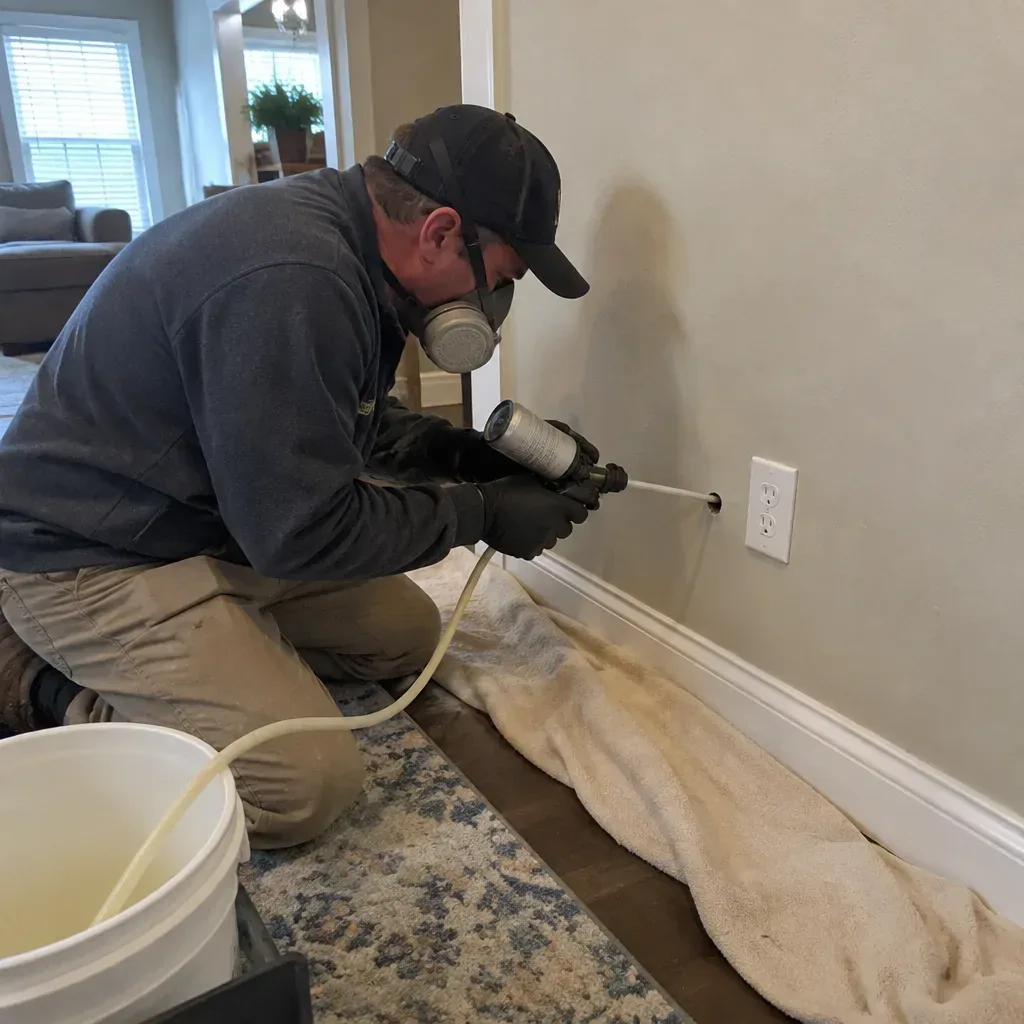
How Termiticide Foam Works in Rio Rancho
Termiticide foam belongs only where its label permits; in Rio Rancho, void access and occupant precautions shape its use.
Termiticide foam can treat activity in a wall void when an inspection identifies the target, an access point can reach it, and the product label allows that use. Barriers can limit coverage, so compare the planned area with the inspection and label directions.
How Foam Reaches Enclosed Paths
In Rio Rancho, a home’s location near Corrales, Bernalillo, or Albuquerque cannot show what is behind its drywall. Termiticide foam may reach activity inside a wall void when an inspection identifies a suitable access point and the product label allows that use. The key is controlled placement: foam can move through a cavity from an opening, but it cannot confirm or treat every hidden route. The inspection findings, the wall structure, and the label set the limits.
Foam injection delivers termiticide through a small opening into a targeted void. The material expands into spaces around framing and other surfaces, which can help reach a concealed area that is difficult to access directly. That reach depends on the cavity’s shape and obstructions; insulation, fire blocking, or a closed compartment can interrupt movement. A Rio Rancho homeowner should ask which observed activity the opening is meant to reach and how the pro will know the placement matches the inspection.
Termiticide foam may suit a localized treatment when inspection evidence points to termite activity inside an enclosed void and the product label permits that site and use. Foam injection carries product into reachable cavities, but obstructions and the void’s layout can limit placement; treatment there does not establish control beyond that area. Keeping the inspection findings with the treatment details can help distinguish this localized work from any later activity elsewhere. Compare its directions with the inspection findings before placement.
When Void Conditions Permit Placement
Placement starts with evidence, not a guess at where foam might travel. An inspection looks for activity, damage, and property conditions that could support termites, then considers whether a void can be reached without opening a larger area. In Rio Rancho, a stain or damaged trim alone cannot show the full extent of hidden wood damage. The owner can point out where signs appeared and leave them undisturbed, giving the inspection a clearer starting point.
The proposed opening matters because the nozzle needs access to the intended cavity, and the cavity must connect to the target area. If a wall has separated compartments, one injection point may reach only one section. If the suspected activity lies behind a barrier, foam may not travel there as expected. Before treatment, the pro should explain the access point, the area it is intended to reach, and any uncertainty about blocked or disconnected spaces.
A product label governs where and how its termiticide may be used, including application limits and precautions for people, pets, and the surrounding area. The label for a proposed foam product should specifically allow the target use; the word “foam” alone does not establish that it is suitable for every wall cavity. For a Rio Rancho property, compare the product directions with the inspection findings and ask which rooms or spaces must remain clear during application.
Where Localized Foam Treatment Stops
Keep people and pets out of any area the product label or applicator says to restrict. Do not enter or handle a treated opening until the stated reentry conditions are met. These instructions depend on the product and application, so a general rule cannot replace the label. Before work begins, the owner should get clear directions about the affected room, ventilation if specified, and when normal use can resume.
Access may require drilling or another opening in a finish surface, and that can leave a patch or repair need after placement. The owner should ask where access will be made and what the treatment discussion includes about closing the opening. This is separate from chemical precautions: a sealed patch does not show that every connected void was reached. Keep the area undisturbed until the product directions allow normal contact and use.
Label Directions and Occupant Precautions
After application, the written record should identify the treated location, product, and any restrictions or follow-up instructions the label requires. That detail matters if signs later appear elsewhere, because a localized foam application does not document the condition of uninspected spaces. In Rio Rancho, keep the treatment information with the inspection findings so the owner can compare any later observations with the actual target and avoid assuming that one treated cavity resolved every concern.
Stop if the target area is uncertain, the label does not permit the proposed use, or the safety directions cannot be followed. Ask the pro to explain whether the suspected activity is reachable from the planned opening and what remains outside that treatment area. Foam can be a fit for a defined, accessible void; it is not proof that hidden termite activity is absent elsewhere. The next step should follow the inspection and the product’s written directions.
Before Foam Is Applied
- Confirm the inspection identified activity in the specific void proposed for foam injection.
- Check that the product label permits the target use and follow its people and pet precautions.
- Ask what the access point can reach and which connected or hidden spaces remain outside the treatment.
- Confirm the suspected termite path reaches a void accessible through an appropriate opening; foam cannot treat spaces the product cannot reach.
- Check whether insulation, wall materials, or blocked cavities could limit foam movement, and tie the proposed placement to inspection findings.
- Share household sensitivities or access needs with the licensed pros we connect you with before service begins.
Termite Help FAQs
What lets termite foam reach activity inside a wall void?
Termiticide foam may suit a wall void when an inspection identifies activity there, a suitable access point reaches the cavity, and the product label permits that application. Barriers or disconnected spaces can limit coverage. The owner should ask what area the planned injection targets and what remains unassessed.
Can insulation or blocked cavities limit foam injection?
People and pets should stay away for the period and under the conditions stated on the product label and by the applicator. Requirements vary by product and use. Before treatment, ask which spaces are affected and what conditions must be met before anyone returns.
How long must people and pets stay away after treatment?
No. Foam placement is localized to the void it can reach from the access point. It does not establish that connected cavities or other parts of the structure were treated. The inspection findings and written treatment record should make clear what was addressed and what may need separate evaluation.
Check the Target Void and Product Label
Have the pros we connect you with compare the inspected void, proposed product, and label precautions before application.
Call (505) 398-8170